
얼마나 가슴 졸이고 기달렸던가!
진정, 대학입학 소식보다 더 간절히 기다렸던거 같다 -_-;
하지만..그런 기다림, 간절함 끝에 온....
랩맨 합격소식!
우화화화화화!!!
얼마나 가슴 졸이고 기달렸던가!
진정, 대학입학 소식보다 더 간절히 기다렸던거 같다 -_-;
하지만..그런 기다림, 간절함 끝에 온....
랩맨 합격소식!
우화화화화화!!!
코리아타임즈에서 주최했던 안중근 의사 영문 에세이 콘테스트에서 은상을 수상했습니다.
많이 부족하고 미흡한 부분도 많았지만, "도전"이라는 단어로 출품했던 용기가..
뜻 밖의 좋은 결과로 돌아온 것 같네요.
이래저래 감사할 일들이 많아져 갑니다.
| ||
|
|
Actual article: http://www.koreatimes.co.kr/www/news/nation/2009/10/119_54187.html
Korea Herald 에서 주최하는 영어 말하기 대회!
여러분도 도전해 보세요!!!!
흥미로운 글이 있어 짧게 나누어 보고자 합니다.
경제시사 주간지인 이코노미스트에 올라온 글인데요...
"역사 전쟁"이라는 주제를 가지고 이야기를 하고 있습니다.
저 글을 보는 순간,
저는 순간적으로 우리나라와 일본 사이에 있는 바다가 "동해"(East Sea) 로 되어있는지 "일본해"(Sea of Japan) 으로 표기되었는지 부터 확인했습니다.
그리고 또 우리나라의 극동이 "독도" 로 제대로 표기되었는지..아니면 "타케시마"로 되었는지...
저도.... 어쩔 수 없는 한국인 입니다 ㅡ
글에서도 이야기 하고 있지만... 이 문제로 이코노미스트 본사도 여러차례 서신을 받은 모양입니다.
우리나라에서 뿐만이 아니라 일본에서도, 중국에서도 [중국과 일본사이에서도 이와 같은 분쟁이 있다고 하네요. 처음 알았음] 수 차례 서신을 받는다니...
글을 쓰는 작가도 어지간히 난처할 거 같습니다.
그래도 확실히 해야할 건 확실히 해야죠!!!
우리나라 동편에 위치한 바다의 이름은 East Sea 가 맞고!
그 East Sea 에 있는 조그마한 섬 이름은 Dokdo 가 맞습니다!!
하지만... 제가 조금 울컥한건 지도에서가 아니라..
마지막 부분에서 나온 글인데요...
아래 하이라이트로 칠한, 바로 저 대목입니다.
위안부에 대한 글인데...
결론부터 말하자면, 일제침략 당시 일제를 위해 일했던 많은 한국 남성들이 한국 여성들을 위안부로 끌려가게끔 내몰았다는 겁니다. 저 대목을 읽는순간 어찌나 울화통이 터지던지... ...
정말이지 다시는 힘 없는 나라가 되어서는 안되야 겠다는 생각이 들었습니다.
세계 어느 나라 남자들이 자기 나라 여자들을 침략자들에게 넘겨주는 역사가 있었겠습니까?
수치 중에 수치가 아닐 수 없습니다.
최근 미디어에선 안중근 의사님을 다시금 재조명 하고 있습니다.
이토 히로부미를 저격했던 안중근 의사님.
의사님께서 만약 이런 남성들을 보셨더라면....
히로부미를 저격하려 했던 저격탄중 한 발은 이들을 향해 돌리셨을 지도 모르겠습니다.
Banyan
History wars
| |
 | |
JAPAN’S nearest neighbours have long been less ready than has the rest of Asia to forgive and forget the country’s aggressive past: a brutal colonisation of Korea in 1905-45 and a creeping occupation of China from 1931 leading to total war. Both projects were pursued ruthlessly and entailed civilian massacres, torture and slavery in factories, mines and military brothels.
So Yukio Hatoyama, Japan’s new prime minister, has pleased the neighbours by promising that rule by his Democratic Party of Japan would transform Japan’s relations with them. He made the pledge in both Seoul, where he met South Korea’s president, Lee Myung-bak, on October 8th, and then in Beijing at a three-way summit with China’s leaders. Unlike the weasel-worded Liberal Democratic Party, which long ran the country, Mr Hatoyama’s new government, he says, “has the courage to face up to history.”
Both Mr Lee and China’s prime minister, Wen Jiabao, were delighted. Dealing honestly with historical matters, they affirmed, would make it much easier to tackle contemporary challenges together—notably, getting North Korea to give up its nukes, and deepening economic co-operation. Mr Lee said Mr Hatoyama had opened the way for “future-oriented relations”. The talk now is of reviving old plans for an undersea tunnel linking South Korea and Japan. Emperor Akihito may visit South Korea, a first. Both South Korea and China have applauded Japan’s proposal for a jointly compiled history textbook.
If only it were so simple. For all the bonhomie now, past hopes for “future-oriented” relations have often been frustrated. One problem is disputed territory (see map). Japan contests Dokdo, a rocky outcrop controlled by South Korea, while China claims the Senkaku, held by Japan. In addition, Japan contests Russia’s control of four northern islands seized in August 1945. Over the years Chinese, Japanese, South Korean and Russian diplomats have all berated The Economist over our maps.
|
|
 |
Japan insists Dokdo should be called “Takeshima”. The South Koreans insist on the “East Sea” in place of the Sea of Japan. Over Dokdo/Takeshima, the websites of Japan’s and South Korea’s foreign ministries wage a virtual war, with pop-up cyber “history halls” and the like (in South Korea’s case, in nine languages). Yet both sides look merely ridiculous. Japan’s justification glides over the fact that its 1905 claim marked a first step in imperial annexation. South Korea argues that Dokdo has been “Korean” since 512, but uses the name for a country that did not exist until 1948. Competing for legitimacy with North Korea, the South also insists on the “East” rather than the “Chosun” Sea, since “Chosun”, a much more common reference in old Korean documents, is these days associated with the North. Empty specks of rock do duty as stand-ins for wider and even touchier historical issues.
Things would be better if Japan were now readier to call a slave’s spade a spade. It has apologised many times for its brutal past, but only in vague terms, expressing “remorse” for ill-defined damage. Most apologies, including the one that has since become a template, by the then prime minister, Tomiichi Murayama, at the 50th anniversary of the war’s end, appear to say sorry to the Japanese people first. Mr Hatoyama does not call for the imperial family to break the so-called chrysanthemum taboo by admitting guilt on behalf of the wartime emperor, Hirohito. Nor does he suggest that the Diet (parliament) pass a law expressing national contrition instead of merely making statements. So, on this, he does not look like a mould-breaker. But then the leaders of South Korea and China may not want him to be. Being able occasionally to beat Japan for its lack of remorse is not all bad.
But Alexis Dudden of the University of Connecticut points out* that as vague apologies proliferate, the human victims of imperialism, though winnowed by old age, are ever less ready to accept them. The many wartime “comfort women”, or sex-slaves for the army, of whom South Koreans made up the biggest number, for example, want individual apologies and redress from the state. Despite abundant and harrowing testimony, Japan admits only general responsibility. The foreign ministry refers not to the women, but to “the issue known as ‘wartime comfort women’”.
When America’s Congress called on Japan in 2007 to apologise for the comfort-women system, Ichiro Ozawa of the DPJ, now the party’s secretary-general, threatened a Diet resolution damning the atomic bombings of Hiroshima and Nagasaki. His demeaning of the comfort women was grotesque but symptomatic: even today, many Japanese believe the atomic horror washed away any guilt for devastation in other parts of Asia.
But then the South Korean government gets more worked up about Japanese claims on a guano-flecked rock more than it does about the comfort women. After all, many of the men sending women to the front were, well, Koreans, working for the colonial authorities. Later, from 1948, the instruments and executors of Japanese repression were hitched to the new South Korean state—under American military tutelage to boot. That is all too inconvenient to highlight today.
So official versions of history tend to veer away from the truth, not towards it. You only have to look at the Chinese history on display at the extravaganzas for last year’s Beijing Olympics or this month’s National Day celebrations. The first (traumatic) 30 years of the Communist Party’s 60-year rule were airbrushed out. History, as Simon Schama, a master of the craft, says, should be the instrument of self-criticism, not self-congratulation. Not just in dictatorial China, but also in democratic South Korea and Japan, history still has far to go if it is to serve that aim.
Actual article at:
http://www.economist.com/world/asia/displaystory.cfm?story_id=14660487
Weak won seen as contributing, but experts say local products gain favor
October 22, 2009 | |
For the first time, Korea’s trade surplus outranked Japan’s during the first half of the year, the government said yesterday. Actual ariticle: http://joongangdaily.joins.com/article/view.asp?aid=2911605
|
영어 글쓰기 수업에서 자유 주제로 글을 하나 써오라고 해서..
한참을 고민하다가 정한 주제입니다.
"U.S. Army's Stay (or Station) in Korea"
지금은 그래도 조금 잠잠해 졌지만, 한참 말이 많았죠?
아직까지도 몇몇 단체들 (예: 주한미군 철수 운동본부 http://www.onecorea.org/) 은 미군 철수를 강력히 외치면서 미군철수 운동을 계속 진행해 오고 있습니다.
저는 이와 반대로, 주한미군 주둔을 찬성하는 입장에서 글을 써 보았습니다.
어느 언어로든 글을 잘 쓴다는 것은 정말이지 많은 연습과 노력이 필요하고, 또 그만치 어려운 것 같습니다. 더욱이 영어로 글을 잘 쓰는 사람들을 보면, 무지무지 부럽습니다ㅡ
어찌 그런 적절한 단어들을 적절한 문장에 배치를 시킬 수 있는 건지... ...
아무쪼록, 부족하지만 더 많은 분들께 평가를 받아보고자 글을 올립니다.
“Our nation honors her sons and daughters who answered the call to defend a country they never knew and a people they never met”
– A quote from the Korean War Memorial
During the Korean War, about 36,000 U.S. soldiers were killed on the battle field. Among them include the 8th Division commander, Gen. Walker and his son, UN commander, Gen. Clark and his son, also President Eisenhower’s son. Korea’s freedom was protected by those who bravely fought for people “they never knew and never met”. Since the war was suspended in 1953 with an armistice agreement, the U.S. army has been stationed in Korea and accounted for keeping peace here as well as in Asia. Recently, however, the U.S. army’s stay in Korea has been questioned about its genuine purpose and need. It seems that the U.S. army staying in Korea creates some problems, but, in fact, without them we will face even greater problems.
First, we should not forget the fact that we are still at the verge of war. North and South Korea’s armed forces are not attacking at each other because we are currently in the period of truce. This is an inconvenient truth for many of us. Especially for the younger generation who view the claim that North Korea will invade South Korea an unbelievable and bogus claim. It’s not surprising because the majority of them do not even have a basic knowledge about the Korean War. They just do not care about the relationship between North and South Korea. They are happy as we are now and think that the people in the North feel the same way. Not true. North Korea is constantly seeking for a chance to invade South Korea. They have increasingly spent above 30 percent of their GDP to their military force. If they were not considering going to war once again, there would be no reason for them to keep increasing their militant force and developing new weapons. Even now, they are testing nuclear bombs, new missiles and new weapons. This is not only because they want to make our society psychologically unstable, but also because they are preparing for the time of its real use: killing people.
Second, having the U.S. army has lucrative economic benefits. According to the study done by an economist, Cho Dong-geun, it would cost Korea 23 trillion US dollars to equip the Korean military to be nearly the same as that of the U.S military force. If we spent this budget in some other fields like education, economic development or social development, it would hugely boost our nation. Furthermore if the U.S. army is no longer stationed in Korea, the risk in country would rapidly increase which means that foreign investors would not invest but would rather pull their investments out. A high possibility of war creates high risk for an investing firm, and high risk for the investing firm creates low economic growth in nation. Many foreign investors count on the U.S. army and its power, but if we lose them, we would have to face a great economic crisis. The U.S. army does not only save our budget, but also brings foreign investment money.
Lastly, the U.S. army staying in Korea keeps the alliance with the U.S, with whom one’s alliance is very important in the global world stronger. In order to survive globalization, one needs to be either a strong nation or have an alliance with a strong nation. Therefore a strong partnership with the U.S plays a very important role. In fact, it has been the key factor for Korea in developing the economy and politics. For instance, the U.S. is one of the best importers for Korean goods and one of the biggest markets. Keeping a good partnership with the U.S. is like a future investment for Korea. It also creates a more intense relationship and more cultural exchanges. As a matter of fact, some of the U.S. soldiers are actually volunteering as an English teacher in elementary schools and few others are involved in the Koreans-U.S. army family partnership programs. Alliance with the U.S. is our “win-win” strategy. Therefore, in order to have a stronger alliance with the U.S. we should start from having more general contact with the U.S. army.
It is true that to have the U.S. army stationed in Korea has some disadvantages like misuse of the land, sub-control of military power and U.S. soldiers’ misconduct. However we are receiving so much more economic and political benefits on the other hand. Korea is not the only nation to host the U.S army. In fact, the U.S. army has its station all over the world including Japan, Singapore, France, Italy and so on. All other nations are facing the same dilemma as we do, but they know the benefit of having them. While North Korea is constantly seeking for a chance to restart the war, let us not forget why they are not attacking us now. They are afraid. They are afraid of the possibility of losing the war, but they are not afraid of the South Korean military force alone. They are afraid of the world’s most powerful military force, the U.S.
Gun varies in its power and its shooting range. While every gun is little different from others, they all have something in common: a safety lock. When the safety lock is on, the gun cannot be fired. It does not matter how powerful the gun is or how far it can shoot. It just cannot be fired. A gun is dangerous, but if the safety lock is on, it is nothing more than a heavy metal stick. Therefore, what matters is not how dangerous it can be, but how safe it can be. For one thing, as long as the U.S. army stays in Korea, North Korea would not be able to unlock the safety of their guns. They will be under our control.
아침이라고 하기에는 조금 이르고... 새볔이라 하기에는 조금 늦은...
그런 애매모호한 시간에 눈이 떠졌습니다.
정신이 조금 들고 나니, 공기가 좀 춥다는걸 알겠더라구요.
'아- 가을이구나.'
잘 만질줄도 모르는 방 온도계를 이리저리 만지작 거리고서야, 온풍이 방에 채워지기 시작했습니다.
'이제... 온풍기가 필요한건가?'
왠지 모르게 씁쓸해 지더라구요.
우리나라에서 겨울을 안 나본 것도 아니고,
군생활까지도 지독한 강원도 인제의 추위 + 눈과 싸워가며 경험했던 저인데...
뭐 그리 새로울 것, 아쉬울 것이 있다고...
갑자기 이른 아침 일어나 온풍기를 틀고 있는 제 모습을 발견하고선, 그리도 씁쓸해 졌던 걸까요?
여러분, 혹시 재즈 좋아하시나요?
저는 요새 들어 재즈가 무척이나 좋아지려 합니다.
가을을 타고 넘어오는 일종의 낭만 때문일까요?
Bill Evans.
충무로 영화제에서 제가 수행을 맡았던 싱가폴 영화人, Philip Cheau 씨께서 소개해 주시고 강력 추천해 주신 재즈 아티스트입니다.
그 분 역시 엄청난 재즈팬으로서 이미 수백장의 재즈앨범 (LC 포함) 을 수집하고 계셨고,
제가 요새들어 재즈가 무척 좋아진다 했더니,
그렇다면 꼭 들어봐야할 아티스트가 한 명 있다면서... 강력히 추천해 주셨습니다.
피아노, 베이스 첼로, 그리고 드럼.
단 세(3)대의 악기로만 이루어진 Trio Jazz Band.
화려한 밴드 구성은 아니죠... ...
하지만, 때론 화려함이나 거대한 스케일에는 표현되지 못하는 것들이 있는 것 같습니다.
어떠세요?
오늘 하루.
제가 재즈 아티스트, 한 분 소개해 드려도 괜찮을까요? :)
쟈니오(Johnny O)입니다.
스스로를 쟈니오라고 불러보긴 또 처음이네요.
친구가 늘 애칭처럼 불러주었던 이름이긴 한데... (앞서 워렌부펫과 같이 사진을 찍었다고 소개드렸던... 그 녀석) 제 스스로를 이렇게 소개하니 영 어색하기 짝이 없습니다.
아무튼,
오늘은 우리나라 대학교육에 대한 짧은 생각을 적어보고자 합니다.
아주 짧게.
저 개인적으로는...
남들보다 늦은 나이에 대학교육을 맛보면서...대학교육에 대한 커다란 기대를 가지고 등용문을 들어왔습니다.
'아! 나도 이제 대학생이구나! 무언가 끊임없는 학구열과 열정에 불타는...그... 아름다운 이름. 대.학.생 이구나!!!'
콜롬버스가 신대륙을 발견할 때의 그 두근거림과 기대감도 제가 가졌던 기대감만큼은 아니였을 겁니다.
대학이라는 곳은 저에게는 '신대륙'이상의 ... 좀 과장되어 표현하자면 '유토피아'였으니까요.
그토록 꿈꿔왔던 배움이 넘치는 ... 멋진 이상세계.
하지만,
수강을 해본 경험은 ... 그닥 멋진 이상세계는 아니였습니다.
그 이유.
1. 교수님들께선 교과서에 있는 것들을 그대로 가르치신다.
: 책 읽는 거와 별반 다를게 없다. 유치원 아이들에게 어머니가 동화책 읽어주는 격이다.
2. 대학생들의 학구열은 ... 엉뚱한데 쏠려있다.
: 학구열은 다 어디로 가고, 취업열만 남아있다. 경제가 어렵다는 건 알지만, 1학년들도 벌써부터 취업걱정이다;;
3. 세상을 변화시킬 '창조'의 힘은 어디로??
: "모방은 창조의 어머니다" 하지만 만약 그 어머니가 한평생 출산을 하지 않는다면? 여긴 모방 천지다;
4. 대학생의 교양은 ??
: 대학생의 교양은 온데간데 없다. 술집문화만이 온전히 남아있다.
이제껏 제가 보고 느낀, 일반적인 대학생과 대학교육에 대한 짧은 관찰이었습니다.
대학교육이 나라의 경쟁력이라는 말이 나오는데...
심히 부끄러운 말이 아닐수 없습니다.
우리나라 대학교육, 그리고 대학생들.
우리나라 미래를 주도할 인재들이라면...
지금쯤 제 글 따위는 읽고 있지 않겠죠.. 호호
그게 그나마 좀 위로가 되네요.
Korea Times (한국일보 영자판) 에서 주최한 안중근 추모기념 에세이 콘테스트에서 수상을 했습니다 :)
요새 '아리랑'(님 웨이즈 지음)을 읽으면서 독립운동가들에 대한 존경심을 키우고 있는 동안,
안중근 의사님 100주념 추모 기념 에세이가 열린다기에...
크게 기대치 않고 적었던 것이 예상외로 결과가 좋았던 것 같습니다.
무엇보다 이번 수상으로 에세이에 대한 자신감이 부쩍 생겼네요!!!
GE-McKinsey Leadership Workshop 에 가서도 들었던,
사람은 실패가 아닌 성공을 통해 더 많은 것을 배운다. 는 말이...
뼈저리게 실감됩니다.
앞으로 더 큰 무대도 도전해 볼 용기가 생겼습니다!!!
아래는 Korea Times 관련기사 입니다.
========================================================================================
The Korea Times and the Northeast Asia History Foundation are proud to announce the 12 winners, including six foreigners, of the Essay Contest in Honor of Patriot Ahn Jung-geun.
Michael Gilbert, a British national but working in Seoul, has been chosen as winner of the Gold Prize in the division of foreigners.
The highest honor in the division of Koreans went to Lee Eun-sung, a student at the Hankuk Academy of Foreign Studies.
Each of them will receive 1 million won in prize money and a plaque.
The Northeast Asia History Foundation and The Korea Times jointly organized the contest to mark the 100th anniversary of the assassination of the first Japanese Resident-General Hirobumi Ito by independence fighter Ahn (1879-1010), which falls on Oct. 26.
Geoffrey Fattig, an American student at Yonsei University, and Patrick Vaillancourt, a Canadian consultant for an online game company in Korea, were selected to share the Silver Prize in the foreigners' category.
The Silver Prize in the Koreans' division went to Kim Chi-seul, a student of Ewha Womans University, and Oh Ju-yong, a student at Kyung Hee University. They will be given 300,000 won and a plaque.
Three people were selected as winners of the Bronze Prize in each division. They are Brian Sullivan, a Canadian medical doctor in Donghae, Gangwon Province; Ahmad Nasikun, an exchange student at Daejeon University from Gadjah Mada University in Indonesia; and Patricia Wong, a teacher at Icheon UNESCO Global Peace Village.
The other Bronze winners are Jo Kyu-hyun, a student at the Hanyoung Foreign Language High School; Hwang Young-youp, a freelance translator; and Lee Yeon-woo, a student of Daewon Foreign Language High School.
The winners will be individually informed of details of the award ceremony which will be held at a conference room of the history foundation in Seoul, at 11 a.m. Nov. 3.
They were chosen from among 1,134 applicants ― 581 Koreans and 553 people from the United States, Canada, Egypt, Russia, Laos, South Africa, Uganda, Bhutan, Finland, Uzbekistan, Malaysia and other countries.
<주소: http://www.koreatimes.co.kr/www/news/nation/2009/10/113_53554.html >
훈민정음은 이제 '훈세정음(訓世正音)'이라 해야 할듯!
- 세계가 우러러보는 찌아찌아족 한글 공용문자 채택 -
- 북한 기관지 <조선신보>도 '찌아찌아족의 한글 채택'에 흐믓해 해 -
금년 한글날은 더욱 빛나는 한글날로 다가온다. 인도네시아 찌아찌아족이 한글을 공용문자로 채택한 해이기 때문이다. 금년 2009년은 10월 9일 한글날의 '9'와 같은 특별한 해의 '9'의 해이다. 그래서 한글날에 맞추어 세종대왕동상이 광화문 앞에 세워지는 것은 그야말로 '훈민정음'에서 이제 '훈세정음(訓世正音)'으로 그 의미를 새기는 경사로운 한글날이 되는 것이다.

*훈민정음은 이제 '훈세정음(訓世正音)'이라 해야 할 것 같다.
해외에 나와보면 코리아 문화로서 태권도와 한글이 중요한 민족적 상징으로 느껴질 때가 많다. 태권도 보급으로 한국 사범이 없는 지역이라도 외국인들이 태극마크 도복차림은 물론 '차렷' 또는 '하나, 둘, 셋, 넷...' 등의 숫자 등을 한국말로 사용하고 있는 것을 보고 있노라면 또 다른 의미 깊은 민족적 긍지를 느끼게 한다.
태권도보다 더욱 강력한 영향력을 주는 것이 한글이다. 그저 외국어로 공부하는 것이 아니라 공용문자로 한글을 채택한다는 것은 대단한 일임에 틀림없다. 인도네시아의 찌아찌아족이 사는 바우바우시에서 차로 30분 정도 떨어진 '소라올리오'라는 동네 이름은 '소라를 올린다'는 우리 말처럼 들리기까지 한다. '바우바우'도 우리 말의 '바위'의 속칭이기도 한 '바우'처럼 들린다. 바우바우 시장은 한국의 도시와 자매결연을 맺고싶다고 말하고 있다.
찌아찌아족이 한글을 채택한 날도 기념하여 축하해주는 날로 했으면 더욱 좋을 것이다. 부톤섬은 16만명 주민들로 구성된 여러 부족들 가운데 올리오족이 중심이다. 한글 공용문자의 중심 마을인 '소라올리오'는 그러한 부톤섬의 중심부족 지역임을 보여준다. 찌아찌아인들의 얼굴들이 그려져 있는 찌아찌아어 한글 교과서를 보면 참 신기하기만 하다.

*바하사 찌아찌아 교과서의 일부
인도네시아의 찌아찌아족이 한글을 공식문자로 채택하자 세계가 놀라서 반응들이 '죽끓듯' 하다. 미국의 유력일간지들인 뉴욕타임즈, 월스트리트저널, 일본인들의 부러운 반응에 이어 북한까지 나섰다.
북한 관영 매체인 일본 조총련 기관지 <조선신보>는 '남조선의 관계자들이 적극 활동한 결과'로 전에 없는 칭송을 하는가 하면, "한글"이라고까지 표기하여 "세계의 이목을 모으고 있다"고 말하면서 내심 우리 민족의 한글이 대한민국에 의하여 처음으로 해외로 뻗어나간 역사적인 쾌거를 기뻐하는 모습을 보여 모처럼 남북이 함께 흐뭇해 하는 모습을 볼 수 있다.
그렇다. 한글 홍보의 경쟁에서 남북이 서로 칭찬하고 밀어주며 가는 모습은 분명 세종대왕도 기뻐하실 것이다. 한글이 얼마나 위대한 문자인지는 이제 세계인들이 입을 모아 감탄하기 시작하며 실제로 공용문자로 활용하기 시작했다는 면에서 우리의 문화 가운데 가장 화려하고 빛나는 순간이라는 느낌에서 알 수 있다. 금년 한글날은 그래서 더욱 세종대왕이 위대하게 보인다.

한글날이 국경일로 다시 회복이 되었지만 공휴일로 재지정되어야 한다. 외국인들이 한글날을 공휴일로 기념하는 것을 바라보아야 하는 일은 창피한 일이다. 최근 미국 메릴랜드 대학 로버트 램지 교수가 '한글날을 기념하는 이유'라는 강연까지 한 바가 있지만, 시카고 대학 언어학 교수였던 고 제임스 맥콜리 교수는 수십년동안 학교 클래스를 쉬면서 학생들과 한글날을 공휴일로 기념해 오기도 했다. 필자의 관련글은 다음에서 볼 수 있다.
*필자의 관련글:
<한글론> 한글 세계화의 원조들 - 원세개, 유소기, 제임스 맥콜리
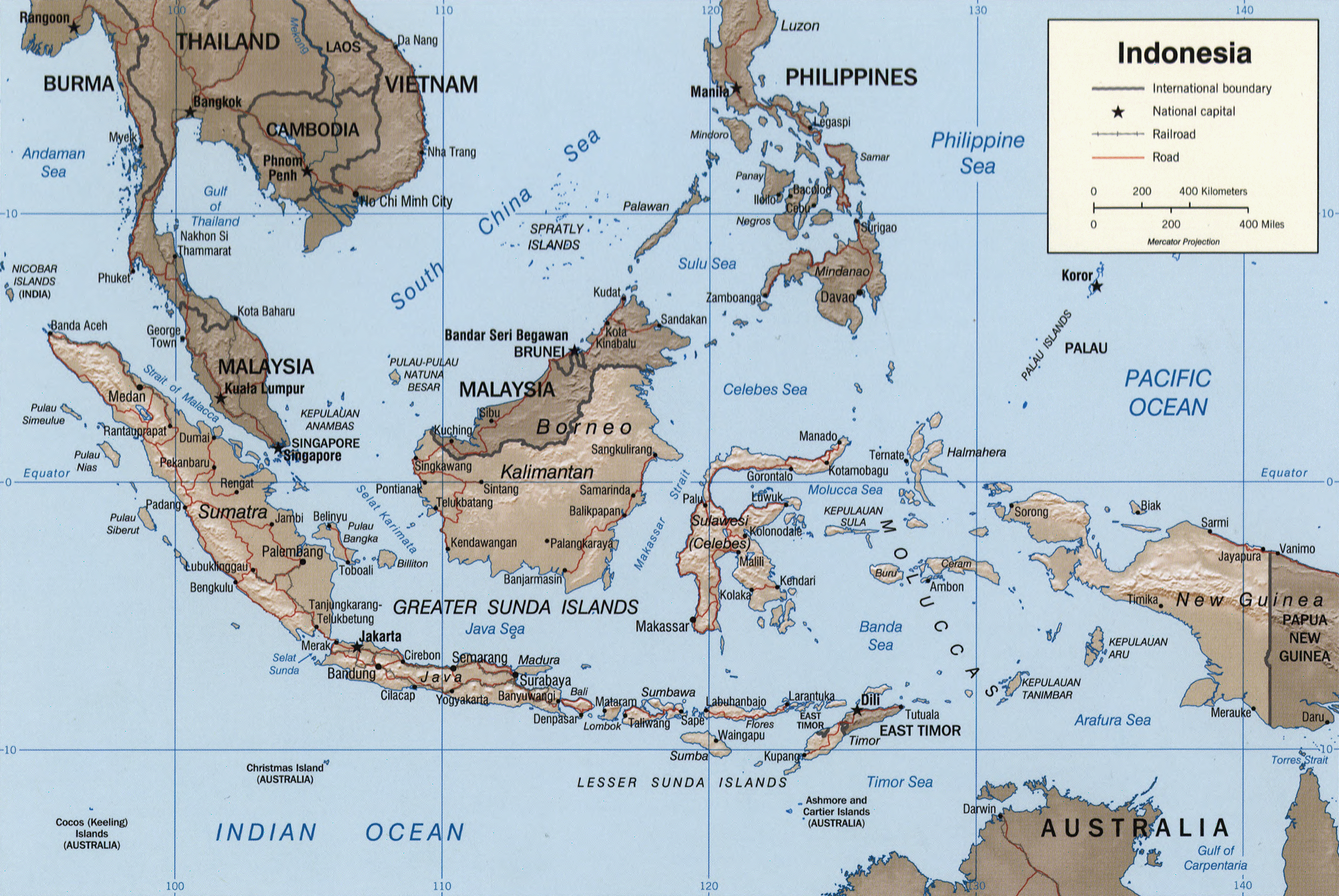
* 인도네시아 부톤섬의 위치

한글을 공용문자로 채택하는 소수민족들은 그들의 전통문화 보존을 기록화하는데 효과는 물론 일단 관광수입을 늘리는데 큰 몫을 할 것으로 보인다. 한글 종주국인 한국인들은 물론 한글 보급을 부러워하는 다른 나라들로부터도 현지를 찾아오는 사람들이 늘어날 것이기 때문이다. 인도네시아는 인구 2억이 넘는 나라로 그 영토와 해양 영역 또한 넓은 거대국가에 속한다. 역사적으로 해양실크로드를 따라 우리민족이 인도를 오가던 중간 교두보 역할을 했던 지역이 인도네시아이다.
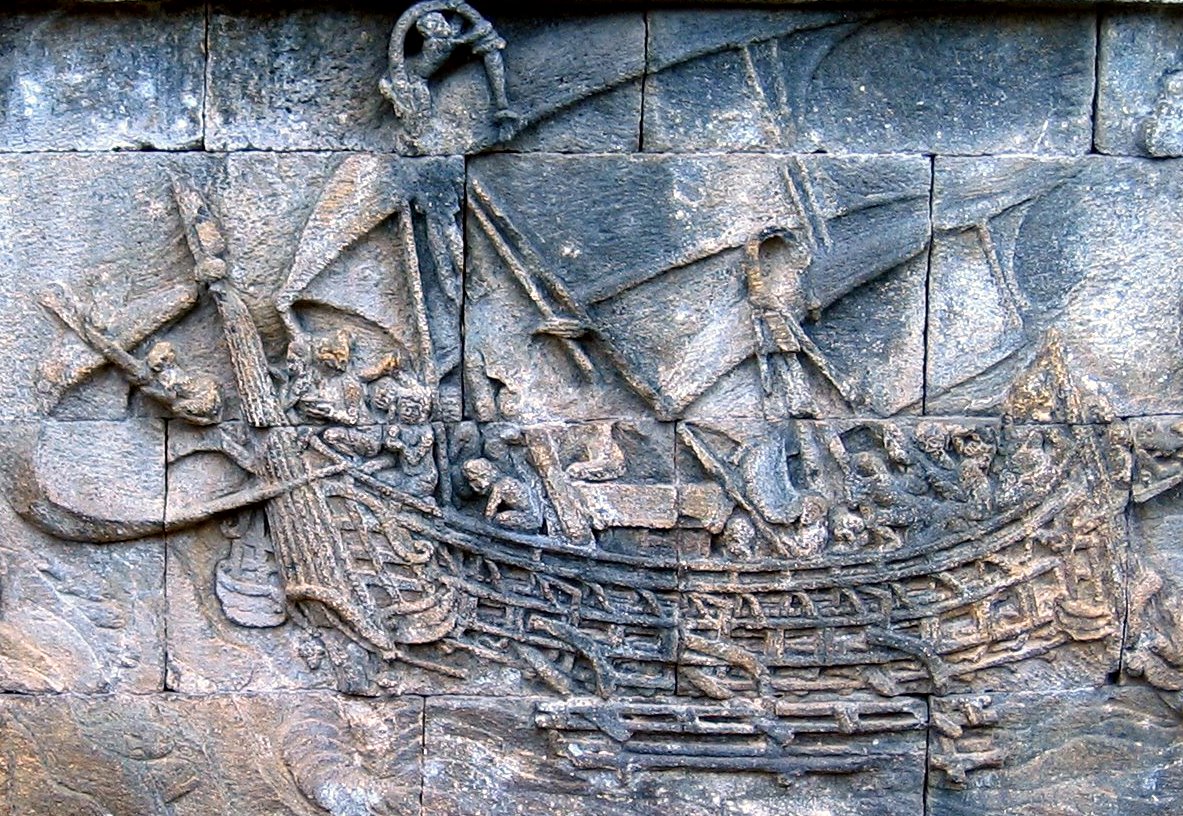
* 8세기경의 보도부두르(Bodobudur)에 새겨진 인도네시아의 고대 선박.
1세기 경의 인도네시아 선박은 아프리카까지 무역을 했다고 알려져 있다.
As early as the first century CE Indonesian vessels made trade voyages as far as Africa.
Picture: a ship carved on Borobudur, circa 800 CE.
기원 1세기경 이미 인도네시아 선박은 아프리카 연안을 오가며 무역을 했다. 개빈 멘지스의 <1421>에서 명나라 정화함대가 인도양 아프리카 연안에 간 것을 놓고 거기에 연장하여 대서양을 건너가 아메리카 신대륙을 발견했다는 가설을 주장한 것에 비하면 오히려 인도네시아가 중국에 비하여 1400년이나 앞서 기원후 1세기 경에 아프리카에 진출한 것을 보여준다.
부톤섬은 발리섬의 북쪽에 있는 작은 섬이지만, 지난 1960년도 인도네시아에 병합된 전통왕국이었다. 마지막 왕이었던 술탄 무하마드 왕이 38대왕인 것을 보면 그 역사 또한 수백년을 이어온 독립부족국가였다는 것을 알 수 있다.
부톤왕조의 첫왕은 흥미롭게도 그곳 사람들의 말에 따르면 징기스칸의 손녀인 '와까까 (중국식 표현은 'Koca Chin')'가 첫 '여왕'이었다는 것이다. 1291년 와까까가 마르코폴로와 함께 자바와 수마트라 등지로 떠나 부톤섬에 머물렀다고 하는데 그 진위는 알 수 없지만, 외래 왕족이 시작한 왕족일 수는 있을 것으로 보인다. 역사적으로 왕조의 시작 신화에서 외부의 기존 강력한 문명이나 왕국의 후손임을 강조하는 것은 흔한 일이다. 가야의 허황옥이 인도에서 왔다는 설과 부톤왕국의 와까까(코카친) 여왕이 징기스칸의 손녀라는 설은 어쩌면 서로 유사한 면이 있다.
코리아의 한글을 공용문자로 채택한 찌아짜아족은 38대를 이어온 찌아찌아족 왕조의 시작이었다는 '와까까'보다 더 오래 이제 그들의 조상들이 남겨놓은 문화와 역사를 한글로 기록하여 더 오랜 역사의 앞날까지 남길 수 있게 된 것이다. 이를 계기로 세계의 수많은 문자 없이 '제뜻을 펴지 못하는 세계인들'을 위하여 보급되어질 훈민정음은 이제 바야흐로 '훈세정음(訓世正音)'이라 칭해야 할 것 같다.
그래서 세상 밖 사람들도 칭송이 자자하고 또 그 은혜를 베푼 세종대왕도 '世宗'이라고 칭한 것이 아니었겠는가. (10/06/09 오두)
*필자의 관련글:
<한글나라> 찌아찌아족은 순경음 'ㅸ' 포함 한글 25자를 사용
| <2007한글날> 한글국호 '대조선' 1893 시카고 박람회 때 공식사용 |
* 아래는 <조선신보>의 사설격인 <메아리>에 난 전문
| 〈메아리〉 가장 과학적인 글 |
| 인도네시아의 한 소수민족이 《한글》을 공식문자로 채택했다는 소식이 남조선은 물론 세계의 이목을 모으고있다. ◆인도네시아 부톤섬에 거주하는 찌아찌아(Cia-Cia)족(族)이 초등학생 40여명에게 찌아찌아어(語)를 《한글》로 표기하여 자기 언어와 문화, 부톤섬의 력사와 사회, 지역전통설화 등을 엮은 교과서를 나눠주고 주 4시간씩 수업을 실시하기 시작했다는것이다. ◆《월스트리트져널》이 동영상으로 수업의 모습을 소개하고있는데 대단히 흥미롭다. 한 교원이 칠판에 찌아찌아어를 자음과 모음을 소리나는대로 《한글》로 써나간다. 《마누》는 닭, 《사우》는 나무, 《빠우》는 우산이다. 《ㅍ》, 《ㅃ》 ,《ㅂ》처럼 거센소리, 된소리, 순한소리를 구별하고있는 점이 특징이다. ◆재미있는것은 훈민정음 창제시에는 있었으나 이후 사라져버린 《순경음(唇軽音=가벼운 입술소리)》인 《ㅸ》자도 쓰고있다는 점이다. 물론 남조선학자가 보탰을것이다. 《ㅸ》자는 《ㅂ》에 《ㅇ》을 더한것인데 실지 발음은 유성음(濁音)인 《b》나 《v》에 가까운것이였다. 이는 분명 소리가 변하지 않는 《b》라는 유성음이 필요해서 일부러 사용한것으로 보인다. ◆이 민족어의 독특한 발음을 표기하는데 《한글》이상으로 적합한 문자는 없다는 얘기다. 이미 로마자로도 일정하게 기록에 남긴바가 있으나 일반화되지 않았다 한다. 남조선의 관계자들이 적극 활동한 결과이기도 하지만 자존심이 높다고 하는 찌아찌아족으로서도 민족의 글이 없는 탓으로 콤퓨터, 디지털시대에는 자기 언어자체가 살아남지 못할것이라는 위기감으로부터 《한글》을 선택한것이라고 할수 있다. ◆어쨌든 가장 과학적이며 우수한 우리 글이 세계에 더 널리 보급될 가능성이 있음을 보여주는 사례다. |
|
[발췌: 오두의 한글나라 |
정원씨!!!
정원씨를 외친 남자배우들.
장동건.
정우성.
그리고 이정재 까지.
정원씨는 좋겠습니다-
그나저나, 이정재와 정우성.
너무 멋지다 ~
나이를 잊어버린 동안도 한 몫을 하지만...
저 두 사람이 가지고 있는 분위기 자체가, 멋스럽다.
후후-
가을인가보다-
정원씨~~~
오늘 수업을 듣는데 교수님께서 문득 그런 말씀을 하시더라구요.
행복에는 공식이 있다고...
그러면서 기사 하나를 꺼내어 소개해 주셨는데.. 최근 IHT 에서 "Happiness is Low Expectatoin" 이란 기사였죠.
내용은 간단했습니다.
세계에서 가장 "행복한" 나라는 어디일까? 라는 질문이였는데...
어떻게 생각하세요?
어느 나라가 가장 "행복한" 나라일까요?
아! 행복하다는게... 무슨 수학 공식을 대입시킨 것이 아니라..
해당 국가 국민들에게 "당신은 지금 얼마나 행복하다고 생각하십니까?" 라고 설문을 돌린거죠.
1~10 중 10이 가장 행복하다고 느끼는 거라면... 그 총합의 평균값을 내서 그 나라의 "행복지수"를 계산해 낸 겁니다.
질문을 좀 더 자세히 하자면... 자신이 가장 행복하다고 느끼는 국민은 어느 나라일까? 라고 풀어 해석할 수 있겠네요...
자...
어떻게 생각하세요?
명문대학들로 가득한 미국?
복지시스템이 가장 잘 되어 있다는 스웨덴?
신사의 나라 영국?
음식과 패션, 주위의 모든 것을 즐길 줄 안다는 프랑스?
풍만한 지중해를 안고 있는 그리스?
예상외로 1등은 덴마크 였습니다. 우리나라 사람들에게는 "덴마크" 하면 왠지 "소세지"가 가장 먼저 떠오르는 것 같더라구요.
과연 덴마크가... 아니 덴마크 국민들은 어떻게... 무엇 때문에 자신이 가장 행복하다고 느끼는 걸까요?
이미 눈치 채셨겠지만.. 답은 "Low Expectation" 굳이 해석하자면 "기대를 많이 안 하는 거죠"
조금 한심하고 답답하게 들릴수도 있다고 생각합니다.
이렇게 급변하는 시대에, 그런 편안한 생각이나 하는 건 시대착오적인 사상이라고 볼 수도 있을 것 같습니다.
하지만... 사람들마다 가지는 "행복"의 구성요소가 다르고 그 원동력이 다르니..
누가 맞다고는 할 수 없겠죠-
아! 공식이요!
네. 공식이 있습니다.
기사에 빚댄 공식. 간단합니다.
Happiness = Reality - Expectation
기대가 크면 클수록 마이너스(-) 되는 값이 커지겠죠?!
그럼 행복은 자연히 줄어들고...
이렇게 보면, 행복은 정말 멀리 있는게 아닌 것 같습니다.
공식이야 어찌됬든 행복은 정말 우리 마음먹기에 달려 있는 것만은 분명한 것 같습니다.


.jpg)
